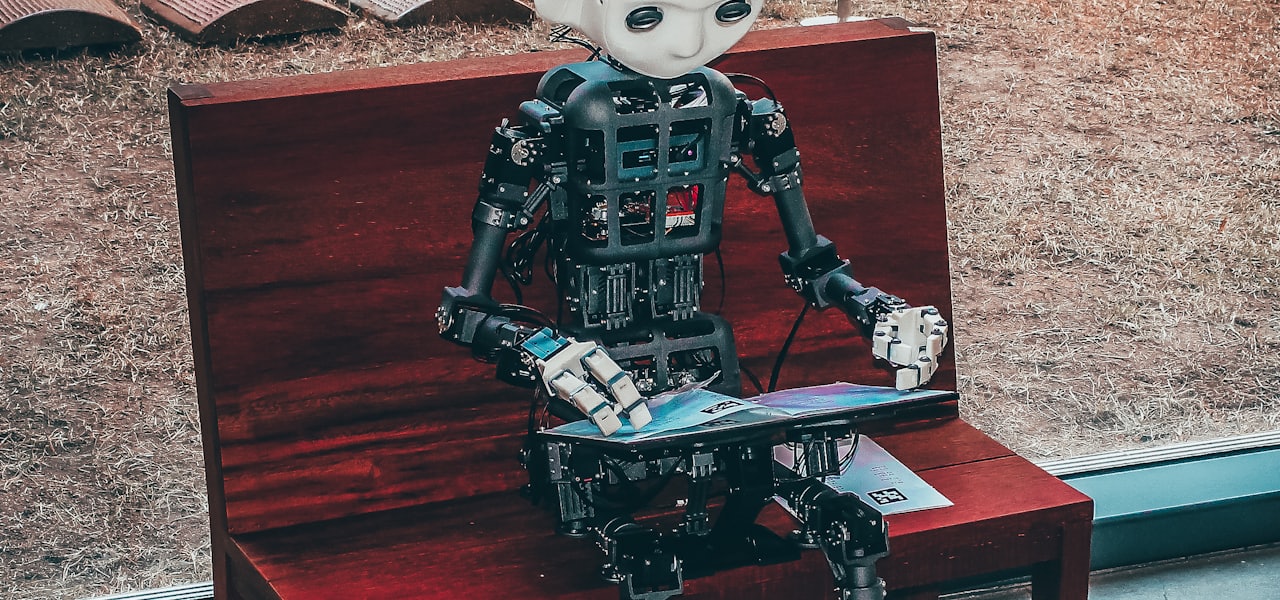
Looking for the best AI text-to-image tool? An AI text-to-image tool is software that uses machine learning to help you get more done — it can save you hours every week by automating repetitive work. Most options offer a generous free tier, with paid plans unlocking higher limits, faster processing, and team features. Whether you are a beginner or a pro, the right AI text-to-image tool slots into your workflow and pays for itself fast. This guide breaks down the top picks, their pros and cons, and who each one is best for.
Spell checker
In software, a spell checker (or spelling checker or spell check) is a software feature that checks for misspellings in a text. Spell-checking features are often embedded in software or services, such as a word processor, email client, electronic dictionary, or search engine. == Design == A basic spell checker carries out the following processes: It scans the text and extracts the words contained in it. It then compares each word with a known list of correctly spelled words (i.e. a dictionary). This might contain just a list of words, or it might also contain additional information, such as hyphenation points or lexical and grammatical attributes. An additional step is a language-dependent algorithm for handling morphology. Even for a lightly inflected language like English, the spell checker will need to consider different forms of the same word, such as plurals, verbal forms, contractions, and possessives. For many other languages, such as those featuring agglutination and more complex declension and conjugation, this part of the process is more complicated. It is unclear whether morphological analysis—allowing for many forms of a word depending on its grammatical role—provides a significant benefit for English, though its benefits for highly synthetic languages such as German, Hungarian, or Turkish are clear. As an adjunct to these components, the program's user interface allows users to approve or reject replacements and modify the program's operation. Spell checkers can use approximate string matching algorithms such as Levenshtein distance to find correct spellings of misspelled words. An alternative type of spell checker uses solely statistical information, such as n-grams, to recognize errors instead of correctly-spelled words. This approach usually requires a lot of effort to obtain sufficient statistical information. Key advantages include needing less runtime storage and the ability to correct errors in words that are not included in a dictionary. In some cases, spell checkers use a fixed list of misspellings and suggestions for those misspellings; this less flexible approach is often used in paper-based correction methods, such as the see also entries of encyclopedias. Clustering algorithms have also been used for spell checking combined with phonetic information. == History == === Pre-PC === In 1961, Les Earnest, who headed the research on this budding technology, saw it necessary to include the first spell checker that accessed a list of 10,000 acceptable words. Ralph Gorin, a graduate student under Earnest at the time, created the first true spelling checker program written as an applications program (rather than research) for general English text: SPELL for the DEC PDP-10 at Stanford University's Artificial Intelligence Laboratory, in February 1971. Gorin wrote SPELL in assembly language, for faster action; he made the first spelling corrector by searching the word list for plausible correct spellings that differ by a single letter or adjacent letter transpositions and presenting them to the user. Gorin made SPELL publicly accessible, as was done with most SAIL (Stanford Artificial Intelligence Laboratory) programs, and it soon spread around the world via the new ARPAnet, about ten years before personal computers came into general use. SPELL, its algorithms and data structures inspired the Unix ispell program. The first spell checkers were widely available on mainframe computers in the late 1970s. A group of six linguists from Georgetown University developed the first spell-check system for the IBM corporation. Henry Kučera invented one for the VAX machines of Digital Equipment Corp in 1981. === Unix === The International Ispell program commonly used in Unix is based on R. E. Gorin's SPELL. It was converted to C by Pace Willisson at MIT. The GNU project has its spell checker GNU Aspell. Aspell's main improvement is that it can more accurately suggest correct alternatives for misspelled English words. Due to the inability of traditional spell checkers to check words in complex inflected languages, Hungarian László Németh developed Hunspell, a spell checker that supports agglutinative languages and complex compound words. Hunspell also uses Unicode in its dictionaries. Hunspell replaced the previous MySpell in OpenOffice.org in version 2.0.2. Enchant is another general spell checker, derived from AbiWord. Its goal is to combine programs supporting different languages such as Aspell, Hunspell, Nuspell, Hspell (Hebrew), Voikko (Finnish), Zemberek (Turkish) and AppleSpell under one interface. === PCs === The first spell checkers for personal computers appeared in 1980, such as "WordCheck" for Commodore systems which was released in late 1980 in time for advertisements to go to print in January 1981. Developers such as Maria Mariani and Random House rushed OEM packages or end-user products into the rapidly expanding software market. On the pre-Windows PCs, these spell checkers were standalone programs, many of which could be run in terminate-and-stay-resident mode from within word-processing packages on PCs with sufficient memory. However, the market for standalone packages was short-lived, as by the mid-1980s developers of popular word-processing packages like WordStar and WordPerfect had incorporated spell checkers in their packages, mostly licensed from the above companies, who quickly expanded support from just English to many European and eventually even Asian languages. However, this required increasing sophistication in the morphology routines of the software, particularly with regard to heavily-agglutinative languages like Hungarian and Finnish. Although the size of the word-processing market in a country like Iceland might not have justified the investment of implementing a spell checker, companies like WordPerfect nonetheless strove to localize their software for as many national markets as possible as part of their global marketing strategy. When Apple developed "a system-wide spelling checker" for Mac OS X so that "the operating system took over spelling fixes," it was a first: one "didn't have to maintain a separate spelling checker for each" program. Mac OS X's spellcheck coverage includes virtually all bundled and third party applications. Visual Tools' VT Speller, introduced in 1994, was "designed for developers of applications that support Windows." It came with a dictionary but had the ability to build and incorporate use of secondary dictionaries. === Browsers === Web browsers such as Firefox and Google Chrome offer spell checking support, using Hunspell. Prior to using Hunspell, Firefox and Chrome used MySpell and GNU Aspell, respectively. === Specialties === Some spell checkers have separate support for medical dictionaries to help prevent medical errors. == Functionality == The first spell checkers were "verifiers" instead of "correctors." They offered no suggestions for incorrectly spelled words. This was helpful for typos but it was not so helpful for logical or phonetic errors. The challenge the developers faced was the difficulty in offering useful suggestions for misspelled words. This requires reducing words to a skeletal form and applying pattern-matching algorithms. It might seem logical that where spell-checking dictionaries are concerned, "the bigger, the better," so that correct words are not marked as incorrect. In practice, however, an optimal size for English appears to be around 90,000 entries. If there are more than this, incorrectly spelled words may be skipped because they are mistaken for others. For example, a linguist might determine on the basis of corpus linguistics that the word baht is more frequently a misspelling of bath or bat than a reference to the Thai currency. Hence, it would typically be more useful if a few people who write about Thai currency were slightly inconvenienced than if the spelling errors of the many more people who discuss baths were overlooked. The first MS-DOS spell checkers were mostly used in proofing mode from within word processing packages. After preparing a document, a user scanned the text looking for misspellings. Later, however, batch processing was offered in such packages as Oracle's short-lived CoAuthor and allowed a user to view the results after a document was processed and correct only the words that were known to be wrong. When memory and processing power became abundant, spell checking was performed in the background in an interactive way, such as has been the case with the Sector Software produced Spellbound program released in 1987 and Microsoft Word since Word 95. Spell checkers became increasingly sophisticated; now capable of recognizing grammatical errors. However, even at their best, they rarely catch all the errors in a text (such as homophone errors) and will flag neologisms and foreign words as misspellings. Nonetheless, spell checkers can be considered as a type of foreign language writing aid that non-native language lea
Neurorobotics
Neurorobotics is the combined study of neuroscience, robotics, and artificial intelligence. It is the science and technology of embodied autonomous neural systems. Neural systems include brain-inspired algorithms (e.g. connectionist networks), computational models of biological neural networks (e.g. artificial spiking neural networks, large-scale simulations of neural microcircuits) and actual biological systems (e.g. in vivo and in vitro neural nets). Such neural systems can be embodied in machines with mechanic or any other forms of physical actuation. This includes robots, prosthetic or wearable systems but also, at smaller scale, micro-machines and, at the larger scales, furniture and infrastructures. Neurorobotics is that branch of neuroscience with robotics, which deals with the study and application of science and technology of embodied autonomous neural systems like brain-inspired algorithms. It is based on the idea that the brain is embodied and the body is embedded in the environment. Therefore, most neurorobots are required to function in the real world, as opposed to a simulated environment. Beyond brain-inspired algorithms for robots neurorobotics may also involve the design of brain-controlled robot systems. == Major classes of models == Neurorobots can be divided into various major classes based on the robot's purpose. Each class is designed to implement a specific mechanism of interest for study. Common types of neurorobots are those used to study motor control, memory, action selection, and perception. === Locomotion and motor control === Neurorobots are often used to study motor feedback and control systems, and have proved their merit in developing controllers for robots. Locomotion is modeled by a number of neurologically inspired theories on the action of motor systems. Locomotion control has been mimicked using models or central pattern generators, clumps of neurons capable of driving repetitive behavior, to make four-legged walking robots. Other groups have expanded the idea of combining rudimentary control systems into a hierarchical set of simple autonomous systems. These systems can formulate complex movements from a combination of these rudimentary subsets. This theory of motor action is based on the organization of cortical columns, which progressively integrate from simple sensory input into a complex afferent signals, or from complex motor programs to simple controls for each muscle fiber in efferent signals, forming a similar hierarchical structure. Another method for motor control uses learned error correction and predictive controls to form a sort of simulated muscle memory. In this model, awkward, random, and error-prone movements are corrected for using error feedback to produce smooth and accurate movements over time. The controller learns to create the correct control signal by predicting the error. Using these ideas, robots have been designed which can learn to produce adaptive arm movements or to avoid obstacles in a course. === Learning and memory systems === Robots designed to test theories of animal memory systems. Many studies examine the memory system of rats, particularly the rat hippocampus, dealing with place cells, which fire for a specific location that has been learned. Systems modeled after the rat hippocampus are generally able to learn mental maps of the environment, including recognizing landmarks and associating behaviors with them, allowing them to predict the upcoming obstacles and landmarks. Another study has produced a robot based on the proposed learning paradigm of barn owls for orientation and localization based on primarily auditory, but also visual stimuli. The hypothesized method involves synaptic plasticity and neuromodulation, a mostly chemical effect in which reward neurotransmitters such as dopamine or serotonin affect the firing sensitivity of a neuron to be sharper. The robot used in the study adequately matched the behavior of barn owls. Furthermore, the close interaction between motor output and auditory feedback proved to be vital in the learning process, supporting active sensing theories that are involved in many of the learning models. Neurorobots in these studies are presented with simple mazes or patterns to learn. Some of the problems presented to the neurorobot include recognition of symbols, colors, or other patterns and execute simple actions based on the pattern. In the case of the barn owl simulation, the robot had to determine its location and direction to navigate in its environment. === Action selection and value systems === Action selection studies deal with negative or positive weighting to an action and its outcome. Neurorobots can and have been used to study simple ethical interactions, such as the classical thought experiment where there are more people than a life raft can hold, and someone must leave the boat to save the rest. However, more neurorobots used in the study of action selection contend with much simpler persuasions such as self-preservation or perpetuation of the population of robots in the study. These neurorobots are modeled after the neuromodulation of synapses to encourage circuits with positive results. In biological systems, neurotransmitters such as dopamine or acetylcholine positively reinforce neural signals that are beneficial. One study of such interaction involved the robot Darwin VII, which used visual, auditory, and a simulated taste input to "eat" conductive metal blocks. The arbitrarily chosen good blocks had a striped pattern on them while the bad blocks had a circular shape on them. The taste sense was simulated by conductivity of the blocks. The robot had positive and negative feedbacks to the taste based on its level of conductivity. The researchers observed the robot to see how it learned its action selection behaviors based on the inputs it had. Other studies have used herds of small robots which feed on batteries strewn about the room, and communicate its findings to other robots. === Sensory perception === Neurorobots have also been used to study sensory perception, particularly vision. These are primarily systems that result from embedding neural models of sensory pathways in automatas. This approach gives exposure to the sensory signals that occur during behavior and also enables a more realistic assessment of the degree of robustness of the neural model. It is well known that changes in the sensory signals produced by motor activity provide useful perceptual cues that are used extensively by organisms. For example, researchers have used the depth information that emerges during replication of human head and eye movements to establish robust representations of the visual scene. == Biological robots == Biological robots are not officially neurorobots in that they are not neurologically inspired AI systems, but actual neuron tissue wired to a robot. This employs the use of cultured neural networks to study brain development or neural interactions. These typically consist of a neural culture raised on a multielectrode array (MEA), which is capable of both recording the neural activity and stimulating the tissue. In some cases, the MEA is connected to a computer which presents a simulated environment to the brain tissue and translates brain activity into actions in the simulation, as well as providing sensory feedback The ability to record neural activity gives researchers a window into a brain, which they can use to learn about a number of the same issues neurorobots are used for. An area of concern with the biological robots is ethics. Many questions are raised about how to treat such experiments. The central question concerns consciousness and whether or not the rat brain experiences it. There are many theories about how to define consciousness. == Implications for neuroscience == Neuroscientists benefit from neurorobotics because it provides a blank slate to test various possible methods of brain function in a controlled and testable environment. While robots are more simplified versions of the systems they emulate, they are more specific, allowing more direct testing of the issue at hand. They also have the benefit of being accessible at all times, while it is more difficult to monitor large portions of a brain while the human or animal is active, especially individual neurons. The development of neuroscience has produced neural treatments. These include pharmaceuticals and neural rehabilitation. Progress is dependent on an intricate understanding of the brain and how exactly it functions. It is difficult to study the brain, especially in humans, due to the danger associated with cranial surgeries. Neurorobots can improved the range of tests and experiments that can be performed in the study of neural processes.
Concept drift
In predictive analytics, data science, machine learning and related fields, concept drift or drift is an evolution of data that invalidates the data model. It happens when the statistical properties of the target variable, which the model is trying to predict, change over time in unforeseen ways. This causes problems because the predictions become less accurate as time passes. Drift detection and drift adaptation are of paramount importance in the fields that involve dynamically changing data and data models. == Predictive model decay == In machine learning and predictive analytics this drift phenomenon is called concept drift. In machine learning, a common element of a data model are the statistical properties, such as probability distribution of the actual data. If they deviate from the statistical properties of the training data set, then the learned predictions may become invalid, if the drift is not addressed. == Data configuration decay == Another important area is software engineering, where three types of data drift affecting data fidelity may be recognized. Changes in the software environment ("infrastructure drift") may invalidate software infrastructure configuration. "Structural drift" happens when the data schema changes, which may invalidate databases. "Semantic drift" is changes in the meaning of data while the structure does not change. In many cases this may happen in complicated applications when many independent developers introduce changes without proper awareness of the effects of their changes in other areas of the software system. For many application systems, the nature of data on which they operate are subject to changes for various reasons, e.g., due to changes in business model, system updates, or switching the platform on which the system operates. In the case of cloud computing, infrastructure drift that may affect the applications running on cloud may be caused by the updates of cloud software. There are several types of detrimental effects of data drift on data fidelity. Data corrosion is passing the drifted data into the system undetected. Data loss happens when valid data are ignored due to non-conformance with the applied schema. Squandering is the phenomenon when new data fields are introduced upstream in the data processing pipeline, but somewhere downstream these data fields are absent. == Inconsistent data == "Data drift" may refer to the phenomenon when database records fail to match the real-world data due to the changes in the latter over time. This is a common problem with databases involving people, such as customers, employees, citizens, residents, etc. Human data drift may be caused by unrecorded changes in personal data, such as place of residence or name, as well as due to errors during data input. "Data drift" may also refer to inconsistency of data elements between several replicas of a database. The reasons can be difficult to identify. A simple drift detection is to run checksum regularly. However the remedy may be not so easy. == Examples == The behavior of the customers in an online shop may change over time. For example, if weekly merchandise sales are to be predicted, and a predictive model has been developed that works satisfactorily. The model may use inputs such as the amount of money spent on advertising, promotions being run, and other metrics that may affect sales. The model is likely to become less and less accurate over time – this is concept drift. In the merchandise sales application, one reason for concept drift may be seasonality, which means that shopping behavior changes seasonally. Perhaps there will be higher sales in the winter holiday season than during the summer, for example. Concept drift generally occurs when the covariates that comprise the data set begin to explain the variation of your target set less accurately — there may be some confounding variables that have emerged, and that one simply cannot account for, which renders the model accuracy to progressively decrease with time. Generally, it is advised to perform health checks as part of the post-production analysis and to re-train the model with new assumptions upon signs of concept drift. == Possible remedies == To prevent deterioration in prediction accuracy because of concept drift, reactive and tracking solutions can be adopted. Reactive solutions retrain the model in reaction to a triggering mechanism, such as a change-detection test or control charts from statistical process control, to explicitly detect concept drift as a change in the statistics of the data-generating process. When concept drift is detected, the current model is no longer up-to-date and must be replaced by a new one to restore prediction accuracy. A shortcoming of reactive approaches is that performance may decay until the change is detected. Tracking solutions seek to track the changes in the concept by continually updating the model. Methods for achieving this include online machine learning, frequent retraining on the most recently observed samples, and maintaining an ensemble of classifiers where one new classifier is trained on the most recent batch of examples and replaces the oldest classifier in the ensemble. Contextual information, when available, can be used to better explain the causes of the concept drift: for instance, in the sales prediction application, concept drift might be compensated by adding information about the season to the model. By providing information about the time of the year, the rate of deterioration of your model is likely to decrease, but concept drift is unlikely to be eliminated altogether. This is because actual shopping behavior does not follow any static, finite model. New factors may arise at any time that influence shopping behavior, the influence of the known factors or their interactions may change. Concept drift cannot be avoided for complex phenomena that are not governed by fixed laws of nature. All processes that arise from human activity, such as socioeconomic processes, and biological processes are likely to experience concept drift. Therefore, periodic retraining, also known as refreshing, of any model is necessary. === Remedy methods === DDM (Drift Detection Method): detects drift by monitoring the model's error rate over time. When the error rate passes a set threshold, it enters a warning phase, and if it passes another threshold, it enters a drift phase. EDDM (Early Drift Detection Method): improves DDM's detection rate by tracking the average distance between two errors instead of only the error rate. ADWIN (Adaptive Windowing): dynamically stores a window of recent data and warns the user if it detects a significant change between the statistics of the window's earlier data compared to more recent data. KSWIN (Kolmogorov–Smirnov Windowing): detects drift based on the Kolmogorov-Smirnov statistical test. DDM and EDDM: Concept Drift Detection online supervised methods that rely on sequential error monitoring to estimate the evolving error rate. ADWIN and KSWIN: Windowing maintain a "window", a subset of the most recent data, of the data stream, which it checks for statistical differences across the window. == Applications in security == Concept drift is a recurring issue in security analytics, especially in malware and intrusion detection. In these systems, models are often trained on past logs, binaries or network traces, but the behaviour of attackers changes over time as new malware families, obfuscation techniques and campaigns appear. When the data no longer resemble the training set, the decision boundaries learned by classifiers or anomaly detectors can become misaligned with the current threat landscape and detection performance can drop unless the models are updated or replaced. Several studies on Windows malware model detection as an evolving data stream and track how performance changes as time passes. They show that classifiers trained on a fixed time window can perform well on nearby data but deteriorate quickly when evaluated on samples collected months or years later, even when large amounts of training data are available. In order to keep up with this, security systems often use sliding or adaptive windows, which restrict training to the most recent portion of the data so that older, less relevant examples are gradually discarded. They also employ drift detectors such as ADWIN and KSWIN that monitor error rates or changes in the distribution of recent observations and signal when the statistics of the incoming stream differ significantly from the past, prompting retraining or model replacement. Related problems appear in spam filtering, fraud detection and intrusion detection, where adversaries change content, patterns of activity or network behavior to evade models trained on historical data. In these settings drift can be gradual, as new types of spam or fraud emerge, or abrupt, after a sudden shift in attack techniques. Common strategies to remain eff
Intelligent agent
In artificial intelligence, an intelligent agent is an entity that perceives its environment, takes actions autonomously to achieve goals, and may improve its performance through machine learning or by acquiring knowledge. AI textbooks define artificial intelligence as the "study and design of intelligent agents," emphasizing that goal-directed behavior is central to intelligence. A specialized subset of intelligent agents, agentic AI (also known as an AI agent or simply agent), expands this concept by proactively pursuing goals, making decisions, and taking actions over extended periods. Intelligent agents can range from simple to highly complex. A basic thermostat or control system is considered an intelligent agent, as is a human being, or any other system that meets the same criteria—such as a firm, a state, or a biome. Intelligent agents operate based on an objective function, which encapsulates their goals. They are designed to create and execute plans that maximize the expected value of this function upon completion. For example, a reinforcement learning agent has a reward function, which allows programmers to shape its desired behavior. Similarly, an evolutionary algorithm's behavior is guided by a fitness function. Intelligent agents in artificial intelligence are closely related to agents in economics, and versions of the intelligent agent paradigm are studied in cognitive science, ethics, and the philosophy of practical reason, as well as in many interdisciplinary socio-cognitive modeling and computer social simulations. Intelligent agents are often described schematically as abstract functional systems similar to computer programs . To distinguish theoretical models from real-world implementations, abstract descriptions of intelligent agents are called abstract intelligent agents. Intelligent agents are also closely related to software agents—autonomous computer programs that carry out tasks on behalf of users. They are also referred to using a term borrowed from economics: a "rational agent". == Intelligent agents as the foundation of AI == The concept of intelligent agents provides a foundational lens through which to define and understand artificial intelligence. For instance, the influential textbook Artificial Intelligence: A Modern Approach (Russell & Norvig) describes: Agent: Anything that perceives its environment (using sensors) and acts upon it (using actuators). E.g., a robot with cameras and wheels, or a software program that reads data and makes recommendations. Rational Agent: An agent that strives to achieve the best possible outcome based on its knowledge and past experiences. "Best" is defined by a performance measure – a way of evaluating how well the agent is doing. Artificial Intelligence (as a field): The study and creation of these rational agents. Other researchers and definitions build upon this foundation. Padgham & Winikoff emphasize that intelligent agents should react to changes in their environment in a timely way, proactively pursue goals, and be flexible and robust (able to handle unexpected situations). Some also suggest that ideal agents should be "rational" in the economic sense (making optimal choices) and capable of complex reasoning, like having beliefs, desires, and intentions (BDI model). Kaplan and Haenlein offer a similar definition, focusing on a system's ability to understand external data, learn from that data, and use what is learned to achieve goals through flexible adaptation. Defining AI in terms of intelligent agents offers several key advantages: Avoids Philosophical Debates: It sidesteps arguments about whether AI is "truly" intelligent or conscious, like those raised by the Turing test or Searle's Chinese Room. It focuses on behavior and goal achievement, not on replicating human thought. Objective Testing: It provides a clear, scientific way to evaluate AI systems. Researchers can compare different approaches by measuring how well they maximize a specific "goal function" (or objective function). This allows for direct comparison and combination of techniques. Interdisciplinary Communication: It creates a common language for AI researchers to collaborate with other fields like mathematical optimization and economics, which also use concepts like "goals" and "rational agents." == Objective function == An objective function (or goal function) specifies the goals of an intelligent agent. An agent is deemed more intelligent if it consistently selects actions that yield outcomes better aligned with its objective function. In effect, the objective function serves as a measure of success. The objective function may be: Simple: For example, in a game of Go, the objective function might assign a value of 1 for a win and 0 for a loss. Complex: It might require the agent to evaluate and learn from past actions, adapting its behavior based on patterns that have proven effective. The objective function encapsulates all of the goals the agent is designed to achieve. For rational agents, it also incorporates the trade-offs between potentially conflicting goals. For instance, a self-driving car's objective function might balance factors such as safety, speed, and passenger comfort. Different terms are used to describe this concept, depending on the context. These include: Utility function: Often used in economics and decision theory, representing the desirability of a state. Objective function: A general term used in optimization. Loss function: Typically used in machine learning, where the goal is to minimize the loss (error). Reward Function: Used in reinforcement learning. Fitness Function: Used in evolutionary systems. Goals, and therefore the objective function, can be: Explicitly defined: Programmed directly into the agent. Induced: Learned or evolved over time. In reinforcement learning, a "reward function" provides feedback, encouraging desired behaviors and discouraging undesirable ones. The agent learns to maximize its cumulative reward. In evolutionary systems, a "fitness function" determines which agents are more likely to reproduce. This is analogous to natural selection, where organisms evolve to maximize their chances of survival and reproduction. Some AI systems, such as nearest-neighbor, reason by analogy rather than being explicitly goal-driven. However, even these systems can have goals implicitly defined within their training data. Such systems can still be benchmarked by framing the non-goal system as one whose "goal" is to accomplish its narrow classification task. Systems not traditionally considered agents, like knowledge-representation systems, are sometimes included in the paradigm by framing them as agents with a goal of, for example, answering questions accurately. Here, the concept of an "action" is extended to encompass the "act" of providing an answer. As a further extension, mimicry-driven systems can be framed as agents optimizing a "goal function" based on how closely the agent mimics the desired behavior. In generative adversarial networks (GANs) of the 2010s, an "encoder"/"generator" component attempts to mimic and improvise human text composition. The generator tries to maximize a function representing how well it can fool an antagonistic "predictor"/"discriminator" component. While symbolic AI systems often use an explicit goal function, the paradigm also applies to neural networks and evolutionary computing. Reinforcement learning can generate intelligent agents that appear to act in ways intended to maximize a "reward function". Sometimes, instead of setting the reward function directly equal to the desired benchmark evaluation function, machine learning programmers use reward shaping to initially give the machine rewards for incremental progress. Yann LeCun stated in 2018, "Most of the learning algorithms that people have come up with essentially consist of minimizing some objective function." AlphaZero chess had a simple objective function: +1 point for each win, and -1 point for each loss. A self-driving car's objective function would be more complex. Evolutionary computing can evolve intelligent agents that appear to act in ways intended to maximize a "fitness function" influencing how many descendants each agent is allowed to leave. The mathematical formalism of AIXI was proposed as a maximally intelligent agent in this paradigm. However, AIXI is uncomputable. In the real world, an intelligent agent is constrained by finite time and hardware resources, and scientists compete to produce algorithms that achieve progressively higher scores on benchmark tests with existing hardware. == Agent function == An intelligent agent's behavior can be described mathematically by an agent function. This function determines what the agent does based on what it has seen. A percept refers to the agent's sensory inputs at a single point in time. For example, a self-driving car's percepts might include camera images, lidar data, GPS coordinates, and speed r
Hierarchical control system
A hierarchical control system (HCS) is a form of control system in which a set of devices and governing software is arranged in a hierarchical tree. When the links in the tree are implemented by a computer network, then that hierarchical control system is also a form of networked control system. == Overview == A human-built system with complex behavior is often organized as a hierarchy. For example, a command hierarchy has among its notable features the organizational chart of superiors, subordinates, and lines of organizational communication. Hierarchical control systems are organized similarly to divide the decision making responsibility. Each element of the hierarchy is a linked node in the tree. Commands, tasks and goals to be achieved flow down the tree from superior nodes to subordinate nodes, whereas sensations and command results flow up the tree from subordinate to superior nodes. Nodes may also exchange messages with their siblings. The two distinguishing features of a hierarchical control system are related to its layers. Each higher layer of the tree operates with a longer interval of planning and execution time than its immediately lower layer. The lower layers have local tasks, goals, and sensations, and their activities are planned and coordinated by higher layers which do not generally override their decisions. The layers form a hybrid intelligent system in which the lowest, reactive layers are sub-symbolic. The higher layers, having relaxed time constraints, are capable of reasoning from an abstract world model and performing planning. A hierarchical task network is a good fit for planning in a hierarchical control system. Besides artificial systems, an animal's control systems are proposed to be organized as a hierarchy. In perceptual control theory, which postulates that an organism's behavior is a means of controlling its perceptions, the organism's control systems are suggested to be organized in a hierarchical pattern as their perceptions are constructed so. == Control system structure == The accompanying diagram is a general hierarchical model which shows functional manufacturing levels using computerised control of an industrial control system. Referring to the diagram; Level 0 contains the field devices such as flow and temperature sensors, and final control elements, such as control valves Level 1 contains the industrialised Input/Output (I/O) modules, and their associated distributed electronic processors. Level 2 contains the supervisory computers, which collate information from processor nodes on the system, and provide the operator control screens. Level 3 is the production control level, which does not directly control the process, but is concerned with monitoring production and monitoring targets Level 4 is the production scheduling level. == Applications == === Manufacturing, robotics and vehicles === Among the robotic paradigms is the hierarchical paradigm in which a robot operates in a top-down fashion, heavy on planning, especially motion planning. Computer-aided production engineering has been a research focus at NIST since the 1980s. Its Automated Manufacturing Research Facility was used to develop a five layer production control model. In the early 1990s DARPA sponsored research to develop distributed (i.e. networked) intelligent control systems for applications such as military command and control systems. NIST built on earlier research to develop its Real-Time Control System (RCS) and Real-time Control System Software which is a generic hierarchical control system that has been used to operate a manufacturing cell, a robot crane, and an automated vehicle. In November 2007, DARPA held the Urban Challenge. The winning entry, Tartan Racing employed a hierarchical control system, with layered mission planning, motion planning, behavior generation, perception, world modelling, and mechatronics. === Artificial intelligence === Subsumption architecture is a methodology for developing artificial intelligence that is heavily associated with behavior based robotics. This architecture is a way of decomposing complicated intelligent behavior into many "simple" behavior modules, which are in turn organized into layers. Each layer implements a particular goal of the software agent (i.e. system as a whole), and higher layers are increasingly more abstract. Each layer's goal subsumes that of the underlying layers, e.g. the decision to move forward by the eat-food layer takes into account the decision of the lowest obstacle-avoidance layer. Behavior need not be planned by a superior layer, rather behaviors may be triggered by sensory inputs and so are only active under circumstances where they might be appropriate. Reinforcement learning has been used to acquire behavior in a hierarchical control system in which each node can learn to improve its behavior with experience. James Albus, while at NIST, developed a theory for intelligent system design named the Reference Model Architecture (RMA), which is a hierarchical control system inspired by RCS. Albus defines each node to contain these components. Behavior generation is responsible for executing tasks received from the superior, parent node. It also plans for, and issues tasks to, the subordinate nodes. Sensory perception is responsible for receiving sensations from the subordinate nodes, then grouping, filtering, and otherwise processing them into higher level abstractions that update the local state and which form sensations that are sent to the superior node. Value judgment is responsible for evaluating the updated situation and evaluating alternative plans. World Model is the local state that provides a model for the controlled system, controlled process, or environment at the abstraction level of the subordinate nodes. At its lowest levels, the RMA can be implemented as a subsumption architecture, in which the world model is mapped directly to the controlled process or real world, avoiding the need for a mathematical abstraction, and in which time-constrained reactive planning can be implemented as a finite-state machine. Higher levels of the RMA however, may have sophisticated mathematical world models and behavior implemented by automated planning and scheduling. Planning is required when certain behaviors cannot be triggered by current sensations, but rather by predicted or anticipated sensations, especially those that come about as result of the node's actions.
Machine learning
Machine learning (ML) is a field of study in artificial intelligence concerned with the development and study of statistical algorithms that can learn from data and generalize to unseen data, and thus perform tasks without being explicitly programmed. Advances in the field of deep learning have allowed neural networks, a class of statistical algorithms, to surpass many previous machine learning approaches in performance. Statistics and mathematical optimisation methods compose the foundations of machine learning. Data mining is a related field of study, focusing on exploratory data analysis (EDA) through unsupervised learning. From a theoretical viewpoint, probably approximately correct learning provides a mathematical and statistical framework for describing machine learning. Most traditional machine learning and deep learning algorithms can be described as empirical risk minimisation under this framework. == History == The term machine learning was coined in 1959 by Arthur Samuel, an IBM employee and pioneer in the field of computer gaming and artificial intelligence. The synonym self-teaching computers was also used during this time period. The earliest machine learning program was introduced in the 1950s, when Samuel invented a computer program that calculated the chance of winning in checkers for each side, but the history of machine learning is rooted in decades of efforts to study human cognitive processes. In 1949, Canadian psychologist Donald Hebb published the book The Organization of Behavior, in which he introduced a theoretical neural structure formed by certain interactions among nerve cells. The Hebbian theory of neuron interaction set the groundwork for how many machine learning algorithms work, with connected artificial neurons changing the strength of their connections based on data. Other researchers who have studied human cognitive systems contributed to the modern machine learning technologies as well, including Walter Pitts and Warren McCulloch, who proposed the first mathematical model of neural networks including algorithms that mirror human thought processes. By the early 1960s, an experimental "learning machine" with punched tape memory, called Cybertron, had been developed by Raytheon Company to analyse sonar signals, electrocardiograms, and speech patterns using rudimentary reinforcement learning. It was repetitively "trained" by a human operator/teacher to recognise patterns and equipped with a "goof" button to cause it to reevaluate incorrect decisions. A representative book on research into machine learning during the 1960s was Nils Nilsson's book "Learning Machines", dealing mostly with machine learning for pattern classification. Interest related to pattern recognition continued into the 1970s, as described by Duda and Hart in 1973. In 1981, a report was given on using teaching strategies so that an artificial neural network learns to recognise 40 characters (26 letters, 10 digits, and 4 special symbols) from a computer terminal. Tom M. Mitchell provided a widely quoted, more formal definition of the algorithms studied in the machine learning field: "A computer program is said to learn from experience E with respect to some class of tasks T and performance measure P if its performance at tasks in T, as measured by P, improves with experience E." This definition of the tasks in which machine learning is concerned is fundamentally operational rather than defining the field in cognitive terms. This follows Alan Turing's proposal in his paper "Computing Machinery and Intelligence", in which the question, "Can machines think?", is replaced by asking whether machines can convincingly imitate a human in its responses to human-posed questions. In 2014 Ian Goodfellow and others introduced generative adversarial networks (GANs) which could produce realistic synthetic data. By 2016 AlphaGo had won against top human players in Go using reinforcement learning techniques. == Relationships to other fields == === Artificial intelligence === As a scientific endeavour, machine learning grew out of the quest for artificial intelligence (AI). In the early days of AI as an academic discipline, some researchers were interested in having machines learn from data. They attempted to approach the problem with various symbolic methods, as well as what were then termed "neural networks"; these were mostly perceptrons and other models that were later found to be reinventions of the generalised linear models of statistics. Probabilistic reasoning was also employed, especially in automated medical diagnosis. However, an increasing emphasis on the logical, knowledge-based approach caused a rift between AI and machine learning. Probabilistic systems were plagued by theoretical and practical problems of data acquisition and representation. By 1980, expert systems had come to dominate AI, and statistics was out of favour. Work on symbolic/knowledge-based learning continued within AI, leading to inductive logic programming (ILP), but the more statistical line of research was now outside the field of AI proper, in pattern recognition and information retrieval. Neural network research was abandoned by AI and computer science around the same time. This subfield, termed "connectionism", was continued by researchers from other disciplines, including John Hopfield, David Rumelhart, and Geoffrey Hinton. Their main success came in the mid-1980s with the reinvention of backpropagation. Machine learning (ML), reorganised and recognised as its own field, started to flourish in the 1990s. The field changed its goal from achieving artificial intelligence to tackling solvable problems of a practical nature. It shifted focus away from the symbolic approaches it had inherited from AI, and toward methods and models borrowed from statistics, fuzzy logic, and probability theory. === Data compression === === Data mining === Machine learning and data mining often employ the same methods and overlap significantly, but while machine learning focuses on prediction based on known properties learned from the training data, data mining focuses on the discovery of previously unknown properties in the data (this is the analysis step of knowledge discovery in databases). Data mining uses many machine learning methods, but with different goals; on the other hand, machine learning also employs data mining methods as "unsupervised learning" or as a preprocessing step to improve learner accuracy. Much of the confusion between these two research communities comes from the basic assumptions they work with: in machine learning, performance is usually evaluated with respect to the ability to reproduce known knowledge, while in knowledge discovery and data mining (KDD) the key task is the discovery of previously unknown knowledge. Evaluated with respect to known knowledge, an uninformed (unsupervised) method will easily be outperformed by other supervised methods, while in a typical KDD task, supervised methods cannot be used due to the unavailability of training data. Machine learning also has intimate ties to optimization: Many learning problems are formulated as minimisation of some loss function on a training set of examples. Loss functions express the discrepancy between the predictions of the model being trained and the actual problem instances (for example, in classification, one wants to assign a label to instances, and models are trained to correctly predict the preassigned labels of a set of examples). === Generalization === Characterizing the generalisation of various learning algorithms is an active topic of current research, especially for deep learning algorithms. === Statistics === Machine learning and statistics are closely related fields in terms of methods, but distinct in their principal goal: statistics draws population inferences from a sample, while machine learning finds generalisable predictive patterns. Conventional statistical analyses require the a priori selection of a model most suitable for the study data set. In addition, only significant or theoretically relevant variables based on previous experience are included for analysis. In contrast, machine learning is not built on a pre-structured model; rather, the data shape the model by detecting underlying patterns. The more variables (input) used to train the model, the more accurate the ultimate model will be. Leo Breiman distinguished two statistical modelling paradigms: the data model and the algorithmic model, wherein "algorithmic model" means more or less the machine learning algorithms like Random forest. Some statisticians have adopted methods from machine learning, producing the field of statistical learning. === Statistical physics === Analytical and computational techniques derived from deep-rooted physics of disordered systems can be extended to large-scale problems, including machine learning, e.g., to analyse the weight space of deep neural networks. Statistical physics is thus